 Summiva
When your child is scared of water: a calm, no-force way through
By Anand Yadav · @summiva.app · Posted 12 June 2026 · 9 min read
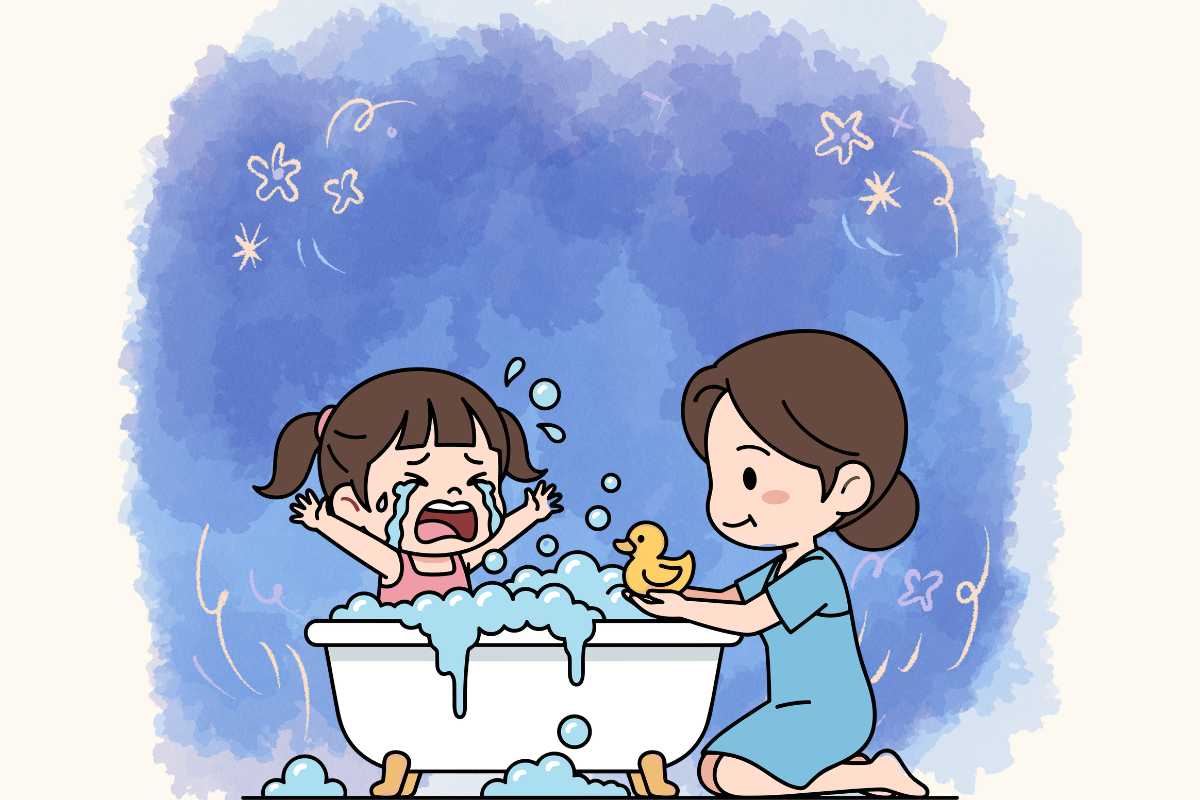
If your child is scared of water, the most useful thing I can tell you is that "scared of water" is almost never one fear. It is several different fears wearing the same name, and the reason most advice does not work is that it treats them as one. Aanya is 20 months old. She screams the moment we lower her into her bathtub and asks to be taken out, and she laughs and splashes in a swimming pool. Same child, same water, opposite reaction. Once you see that a child can be terrified of one kind of water and delighted by another, the whole problem changes shape, and so does the fix.
"Scared of water" is not one fear
A child who is afraid of the bath, a child who is afraid of the deep end, and a child who panics when water touches their face are not afraid of the same thing. The bath fear is often about being lowered into standing water, the confinement of the tub, the drain, or the sound of the tap. The pool fear is usually about depth, cold, or the bigness of it. The face fear is about not being able to breathe or see for a second. Each one has a different trigger, and each one needs a different small step to get past.
This is why the generic "just make it fun" advice falls flat. It is not wrong, it is just aimed at no fear in particular. Before you can help, you have to know which fear you are actually looking at. Naming it is genuinely half the work.
Aanya's two waters
Let me show you the split, because it is the clearest example I have.
In the bath, the trigger is exact. She is fine until the moment we lower her down into the tub, and that is when she cries and asks to be removed. It is not the water on her skin, because she tolerates a careful pour over her head perfectly well. It is not the tap or the drain as far as we can tell. It is the act of being placed down and contained in standing water. Knowing that one detail changed how we think about it. Her fear is not "water". Her fear is being lowered into the tub.
In a pool, none of that applies. The first time, she cried, the way she cries in the tub. Then we started splashing, and somewhere in the splashing she forgot to be frightened and started laughing. There is no tub to be lowered into, no walls closing around her, just open water and a parent holding her. The thing that scares her at home is simply absent. If we had decided she "hates water" based on the bath, we would have been completely wrong about the pool.
I am not a swimmer myself, so I have no technique to fall back on. All I can really do is watch her closely and stay calm, and watching closely is what told us where the fear actually lived. That is available to any parent, swimmer or not.
Find your child's exact trigger
Before the next bath or pool trip, give yourself one job: notice the precise moment the fear switches on. Not the general "she hates it", but the exact second her body changes.
- Is it the filling? If she tenses when the tap is running, the rushing water or its sound may be the trigger, and you can fill the tub before she is in the room.
- Is it being lowered in? If, like Aanya, the crying starts as she is placed down, the fear is the immersion and the confinement, not the water.
- Is it the face? If she is fine until water reaches her eyes or nose, the work is about pouring and bubbles, not the tub itself.
- Is it the drain? Many toddlers fear being pulled down the plughole. If she only panics as the water empties, take her out first and drain it later.
- Is it the depth? In a pool, if she clings as the water gets deeper, the fear is depth, and you stay in the shallow end for as long as it takes.
The trigger is the whole diagnosis. Everything you do next is built around that one observation.
Graded exposure: the calm method that actually works
The approach with the best track record for childhood fears is not a swim trick, it is a simple idea from psychology called graded exposure, sometimes called systematic desensitisation. You break the frightening thing into a ladder of very small steps, and you let the child climb it at their own pace, never being pushed. It is the same principle swim instructors use when they ease a child in toe by toe, just made deliberate.
Here is how to run it.
- Break the fear into tiny steps. For a bath-fearer, that might be sitting in an empty tub fully dressed, then with bare feet, then with a centimetre of water, then a little more, over many separate days.
- Let the child set the pace. Offer the next step, never force it. The child decides when to move up. That sense of control is the difference between a frightening experience and a manageable one.
- Stay on each step until it is boring. Only climb a rung when the current one is genuinely relaxed and dull. If you rush, the fear comes back and you lose ground.
- End every time on a win. Stop while the child is still calm, even after a couple of minutes. The session that ends well is the one they will agree to repeat tomorrow.
For a pool fear, the same ladder might run from sitting on the steps with feet in, to being held in the shallow water, to splashing, to walking through it in your arms. The rungs are different, the method is identical.
What actually moved her, and what we stopped doing
In the pool, the thing that worked was play, not persuasion. Splashing together broke the tension, and a daft game, bouncing her gently while keeping her face well above the water and making a rhythmic "dup dup" sound, turned the water into something she associated with laughing. Her mother swimming nearby helped too, because Aanya is intensely observant and copies her. There were no floaties involved, just our hands. I wrote more about those water games in swimming activities for toddlers.
In the bath, the most important thing we did was stop. We stopped lowering her in and forcing her to stay, because all that taught was that the tub is a place where her "no" does not count. We switched to a calm wash, pouring gently from the shoulders with a hand shielding her face, and we are letting the tub itself wait. She will come back to it. Pushing would only make the next attempt worse.
The one rule under all of it: never force
If you take a single thing from this, take this. Never force a frightened child into the water. The fear is real to them even when it looks irrational to you, and forcing it teaches the lesson you least want, that water is something done to them against their will. That is how a passing phase hardens into a lasting fear. Every step in this whole approach is built to be offered and chosen, not imposed. Slower and chosen beats faster and forced, every single time.
When it is normal, and when to ask for help
Almost all toddler water fear is a normal developmental phase. It often appears between one and two, it can arrive suddenly even in a child who used to love the water, and it usually fades over weeks or months with patience. You are not behind and you have not done anything wrong.
It is worth a word with your paediatrician if the fear is extreme, lasts well beyond the toddler years, causes real distress, or is part of a wider pattern of anxiety showing up in other parts of your child's life. For ordinary water fear, though, time and a gentle, no-force approach are almost always enough. If you do reach the point of lessons later, the American Academy of Pediatrics has sensible guidance on when those make sense.
The bottom line
If your child is scared of water, do not start with a technique. Start by naming the fear, the exact moment it switches on. Then build a ladder of tiny steps around that one trigger, let your child climb it at their own pace, lean on play and your own calm, and never force a rung. A child who is terrified of the bath today can be laughing in a pool sooner than you would think, because they were never afraid of water. They were afraid of one specific thing, and that is a much smaller problem to solve. This is the same patient, one-small-step-at-a-time thinking we built Summiva around for the bigger goals, and it works just as well at the edge of a bathtub.
If you are just getting started in the water, it pairs with how to teach a toddler to swim and the honest, no-affiliate swim gear guide. It is all part of the full guide to swimming for kids.
Frequently asked questions
Why is my toddler suddenly scared of water or the bath?
Sudden water fear is common and developmental, often appearing between ages one and two as a child becomes more aware of their surroundings. It can show up even in a child who previously loved the water. Common triggers include being lowered into the tub, the sound of rushing water, the drain, soap in the eyes, or the depth of a pool. In most cases it is a normal phase that passes over weeks or months.
My child is scared of the bath but not the pool, or the other way around. Is that normal?
Yes, and it is more common than people realise. A bath and a pool are completely different experiences to a child. Fear of the bath is often about the confinement, the drain, or being lowered into standing water, while fear of a pool is usually about depth or cold. A child can genuinely scream in one and relax in the other. Treat them as two separate fears.
How do I help a child who is scared of water?
Use graded exposure. Find the exact moment the fear starts, break that into tiny steps, let your child control the pace, stay on each step until it feels boring, and end every session while they are still calm. Pair it with play and a calm parent, and never force. Forcing a frightened child usually sets you back.
Should I force my child into the water to get them used to it?
No. Forcing a scared child into the water teaches them that water is something done to them against their will, which deepens the fear and can set progress back by weeks. The fear is real to them even when it looks irrational. Go at their pace, let them choose to move forward, and keep every step short and positive.
When should I worry about my child's fear of water?
Most water fear is a normal phase and fades with patience. Consider speaking to your paediatrician if the fear is extreme, lasts well beyond the toddler years, causes significant distress, or spreads into a broader pattern of anxiety in other parts of life. For ordinary toddler water fear, time and a gentle, no-force approach are usually enough.
Turn this into one calm week
Summiva turns goals like this one into a few small real moments a week, matched to your child's age. Built by the parent who wrote this post. Free to start, no card.
One goal free forever. No streaks, no guilt.