 Summiva
Swimming for kids: a calm parent's guide, age by age (1 to 12)
By Anand Yadav · @summiva.app · Posted 12 June 2026 · 11 min read
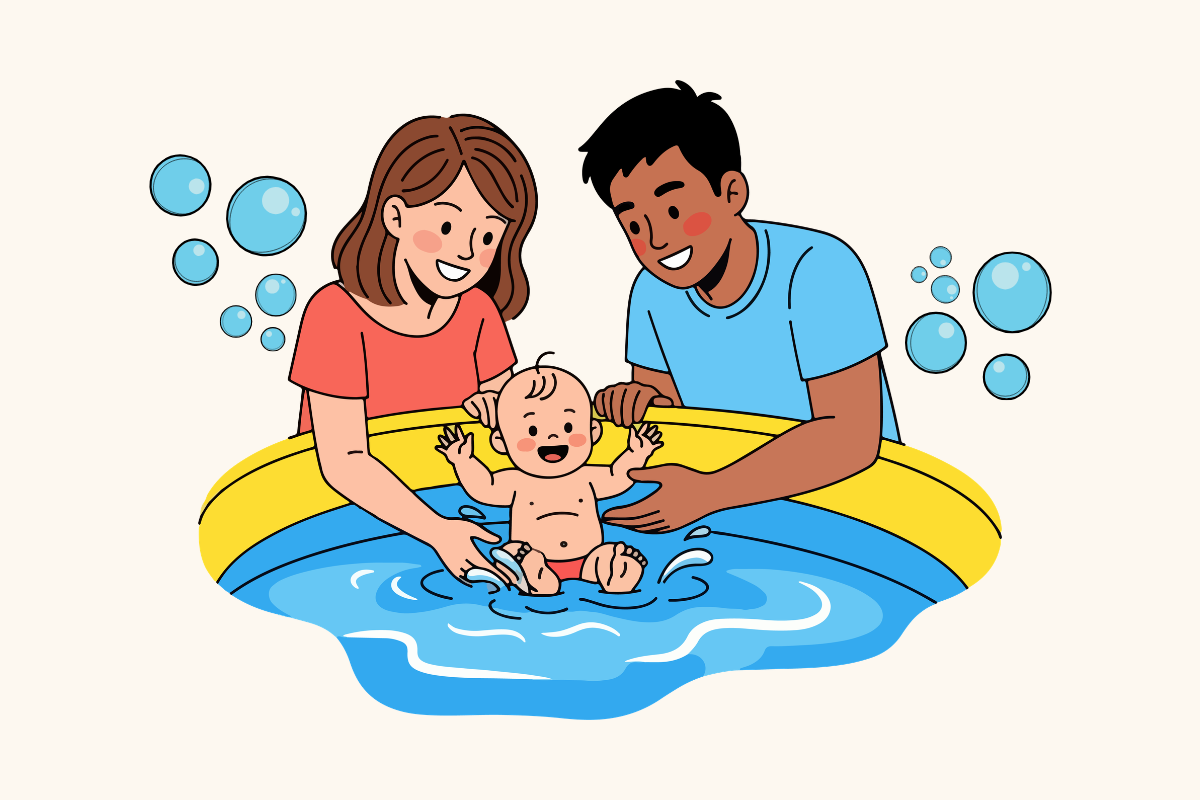
This is the whole swimming journey on one page, from a toddler being held in a pool to a nine-year-old swimming real lengths. I should say up front that I cannot swim. I never learned. That sounds like the worst possible person to write a swimming guide, and for stroke technique it would be. But the most important parts of swimming for kids are not strokes, they are water comfort, safety, and patience, and those I can map honestly. My daughter Aanya is 20 months old, so we are at the very start of this. What follows is the route ahead as I understand it, grounded in what paediatric guidance actually says and in the calm, no-pressure approach we are taking with her.
Why this matters more than most "kids' activities"
Swimming is the one childhood skill that is also a safety skill. That is what makes it different from chess or drawing. The American Academy of Pediatrics cites research linking formal swim lessons to an 88% lower risk of drowning in young children. You do not need any other reason. Before swimming is a sport or a hobby, it is a layer of protection, and that framing quietly takes the pressure off, because the goal stops being a fast freestyle and becomes a child who is safe and comfortable in water.
When should kids learn to swim?
This is the most-asked question, and the honest answer is that age is the weakest part of it. Parent-and-child water play is fine from around 6 months. The AAP says most children should be learning to swim by age 4, and that lessons are safe to begin as early as age 1 for many children. But two children of the same age can be in completely different places, and readiness, how calm a child is in the water and whether they can follow a simple instruction, matters far more than the birthday.
So treat the ages below as a map, not a timetable. A child who meets the water late, or who needs a year to get past a fear, is not behind. They are exactly where they are, and that is the only useful place to start from.
The age-by-age map
Ages 1 to 2: water comfort, nothing more
At this age you are not teaching swimming, you are building trust in the water. Being held, walking around the shallow end, splashing, blowing bubbles, and a supported back float are the whole curriculum. This is exactly where we are with Aanya. She splashes and laughs in a pool once she warms up, and the thing that worked was play, not instruction, a daft bouncing game with her face kept well above the water. There are no strokes here and there should not be. A relaxed body is the foundation everything else is built on. The detail is in how to teach a toddler to swim and the games in swimming activities for toddlers.
Ages 3 to 4: float, glide, and kick
Now real water skills start to appear: an independent back float, putting the face in, gliding off the wall, and kicking. Many children are ready for their first proper lessons in this window, though plenty are not, and that is fine. Just as important as moving forward is the survival side, reaching the wall and climbing out. In our family this is the stage where my wife, who swims, will teach Aanya the basics, the flapping of the hands and legs, how to balance in the water, how to float on her back. A swimming parent is worth more than any class at this age.
Ages 5 to 6: the front crawl and self-rescue
This is the stage most people picture as "learning to swim". By 5 or 6, most children in regular lessons can begin the front crawl, tread water, jump in and resurface on their own, hold their breath, and retrieve an object from the shallow floor. The self-rescue skills, getting back to the surface and to the side, matter more than a tidy stroke, and a good instructor builds both together.
Ages 7 to 8: distance and water sense
Here swimming becomes genuinely useful. Children can swim multiple lengths, add strokes like backstroke and breaststroke, and start to understand that a pool and a lake or the sea are very different in risk. Stamina grows, and so does judgement, though judgement always lags behind ability, which is why supervision never stops mattering.
Ages 9 to 12: refinement, endurance, and choice
By now a confident child is refining strokes, building real endurance, and has proper water competency. This is also the age where, if a child genuinely loves swimming, bringing in serious coaching makes sense. Notice the order, the love and the progress come first, the professional comes second.
The real goal is water competency, not a pretty stroke
It is easy to fixate on the front crawl, but the skill that keeps a child safe is broader, and it has a name: water competency. It means a child can get back to the surface after going under, float or tread to keep their head up, turn around, reach a point they can exit from, and climb out. A child with a beautiful stroke but no idea how to recover from a fall into deep water is less safe than a child with an ugly paddle and solid self-rescue. Whenever you are choosing what to practise, or what to ask of an instructor, weight it toward competency first.
Lessons: when they are worth it, and when they are not yet
Most guides to swimming for kids are written by swim schools, so they all arrive at the same conclusion: sign up now. I want to give you the parent's version instead.
The early water confidence, the comfort, the bubbles, the float, the love of the water, can be built at home and on holidays by an ordinary parent, swimmer or not. Formal lessons earn their place later, for two things a parent often cannot give: clean stroke technique and structured water-survival practice. Our plan with Aanya is deliberate about the order. Her mother will teach her the basics as she grows, and we will seek professional classes only if and when Aanya decides this is something she truly loves. Lessons follow the child's enthusiasm, they do not manufacture it.
That said, if a non-swimming parent like me is the only adult in the picture and there is no swimming parent to lean on, paid lessons move up the list, because a child does need a competent adult guiding the strokes eventually. Honesty about your own limits is part of the plan.
Where swimming sits in the bigger picture
For us, swimming is one domain among several. My job as a parent is to give Aanya a real taste of the major ones, yoga, self-defence, astronomy, chess, swimming, and to build the foundations myself, and then to bring in professional help only when she is making good progress and shows that she loves one of them most. Expose broadly, go deep where the love and the progress meet. That is the whole philosophy, and it is exactly the thinking we built Summiva around, planning a child's long-term skills one calm week at a time rather than chasing a checklist. Swimming is a good place to practise it, because the safety stakes keep you honest about going at the child's pace.
The safety rules that never change, at any age
- An adult within arm's reach. For a young or weak swimmer, every second, with no phone in your hand. This beats any device.
- Floaties are not safety. Puddle jumpers and arm bands teach the wrong body position and a false confidence. There is more on this in the swim gear guide.
- A life jacket is for open water. A boat, a lake, the sea. Not a pool learning aid.
- Never force a frightened child. If yours is scared of the water, work through it gently, as covered in when your child is scared of water.
The one rule that beats every milestone
If you remember nothing else from this page, remember this. Go at your child's pace, never force, and end every session while they are still happy. Readiness beats age, competency beats strokes, and a child who loves the water will outlearn a child who was pushed, every single time. The milestones above will arrive on their own schedule if you protect the one thing that makes them possible, which is a child who wants to get back in the water tomorrow.
Start here
Wherever your child is, there is a calm next step. If you are just beginning, read how to teach a toddler to swim. For things to actually do in the water, see swimming activities for toddlers. For what to buy and skip, the honest swim gear guide. And if fear is the obstacle, start with when your child is scared of water. And if you cannot swim yourself, here is why I am teaching my daughter anyway.
Frequently asked questions
What age should a child learn to swim?
Parent-and-child water play is fine from around 6 months, and the American Academy of Pediatrics says most children should be learning to swim by age 4, with lessons safe to begin as early as age 1 for many children. Age, though, is the weakest signal. Readiness, meaning how calm and ready a child is in the water, matters more than the number.
Can I teach my child to swim if I cannot swim myself?
Yes, for the early years. Water comfort, splashing, bubbles, supported floating, and a love of the water can all be built by a non-swimming parent who stays calm and plays. Strokes are where a swimming parent or a qualified instructor helps. In our family the plan is for the parent who swims to teach the basics, and to bring in professional classes only later, if our child shows she truly loves it.
What swimming skills should a child have by age 4, 6, and 8?
By around age 4, many children can float, kick, reach the side, and get out. By 5 to 6, most can begin the front crawl, tread water, jump in and resurface, and retrieve an object from the shallow floor. By 7 to 8, children can typically swim several lengths, add more strokes, and understand basic open-water risk. These are guides, not deadlines, and children vary widely.
How long does it take a child to learn to swim?
With regular weekly lessons, a child of three or older often becomes a confident swimmer within about 6 to 12 months, roughly 20 to 30 hours in the water. Younger children and those building water confidence from a fearful start take longer, and that is completely normal. Consistency matters more than intensity.
Do kids need formal swimming lessons?
Formal lessons are valuable, especially for stroke technique and water-survival skills, and the AAP cites research linking formal swim lessons to an 88% lower risk of drowning in young children. But you do not need to start with them. Many parents build the early water confidence themselves and bring in lessons once the child is ready, progressing, and genuinely keen.
Turn this into one calm week
Summiva turns goals like this one into a few small real moments a week, matched to your child's age. Built by the parent who wrote this post. Free to start, no card.
One goal free forever. No streaks, no guilt.