 Summiva
How to teach a toddler to swim (a calm, no-pressure start)
By Anand Yadav · @summiva.app · Posted 9 June 2026 · 9 min read
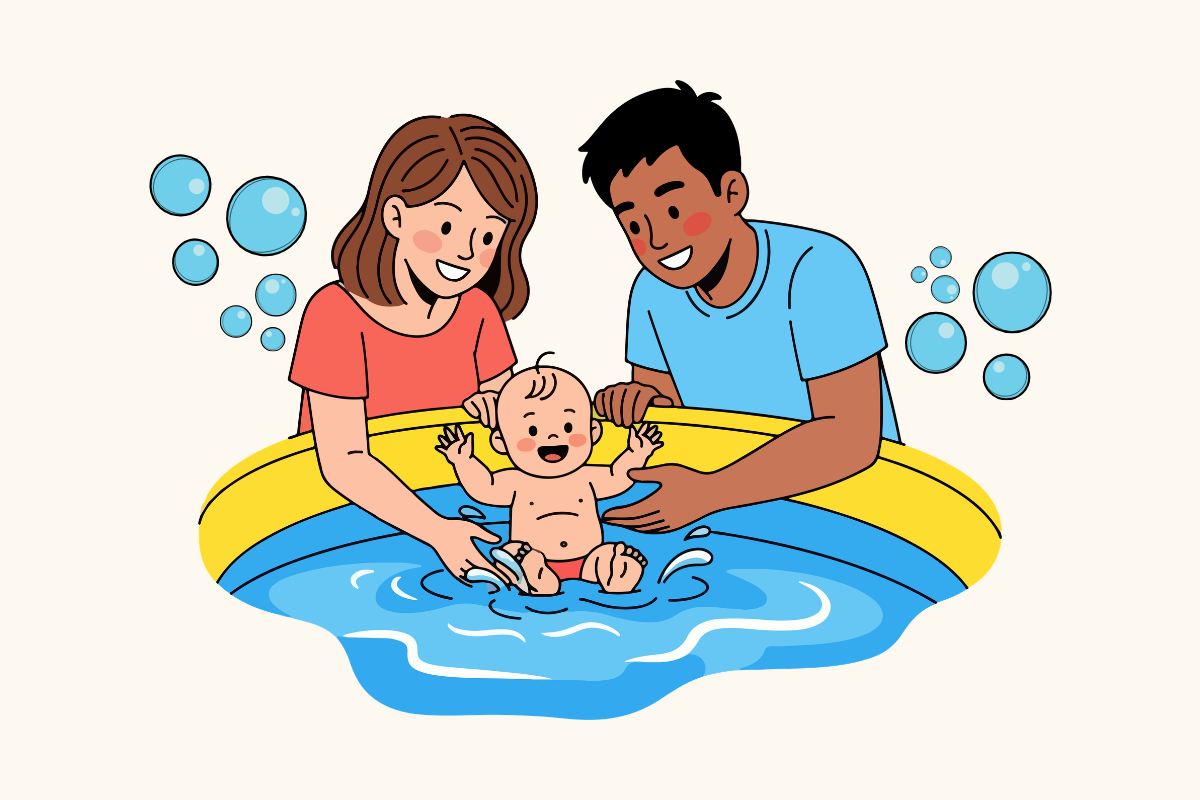
If you are trying to teach a toddler to swim and it keeps turning into a fight at the water's edge, you are probably aiming at the wrong target. A toddler is not going to swim in the stroke sense, and pushing for that is how the pool becomes a place they dread. Aanya is 20 months old. She cannot swim, and she is not supposed to. What we are actually building, every time we get in, is something simpler and more important: trust in the water. That is the whole job at this age, and it is the part almost no swim advice tells you.
A toddler is not "learning to swim" yet. They are learning to trust water.
Teaching a toddler to swim is not about arms and legs. It is about three things: being comfortable in the water, learning to control their breath, and building safe habits around the pool. Strokes come years later.
This matters because the moment you make swimming the goal, you start doing the things that wreck it. You hold them out at arm's length and tell them to kick. You tip them back before they are ready and feel them go rigid. You let an afternoon end on a bad note because you wanted one more try. A toddler does not separate "the pool" from "how the pool felt last time." If it felt like being made to do something frightening, that is the memory they bring back.
So lower the bar on purpose. The aim for the first few months is a child who walks toward the water rather than away from it. Everything useful is built on top of that, and nothing useful is built without it.
If your child is not just hesitant but actively frightened of the water, start there. I wrote a full, no-force guide for a child who is scared of water.
When can a toddler start swimming?
The American Academy of Pediatrics says swim lessons can begin as early as age 1, and advises against formal lessons before 12 months. Age, though, is the weakest signal. Readiness matters more: whether your child is calm in the water and can follow a simple instruction like "blow."
From around 6 months, parent-and-child water time is perfectly fine. That is not a lesson. It is getting used to the feeling of water on the skin, the sound, the temperature, being held differently. By the time formal lessons would help, a child who has had a year of relaxed, unhurried water time is starting from a completely different place than one who is meeting the pool cold.
What we actually do in the water with Aanya
I am not a swim instructor. I am not even a swimmer. I never learned, and getting into a pool with my daughter has quietly made me wish I had. What I can do is hold her, stay calm, and play, and it turns out that is most of what a toddler needs at this stage.
We do not have a weekly class. We get in the water when we travel, the resorts we book usually have a pool, and now and then we visit a local pool that has public access. So it is not a strict routine. It is a handful of unhurried sessions where the only goal is that she enjoys being in the water and trusts it a little more each time. I keep her close, I narrate in a calm voice, and there is never a dunk.
The part I did not expect is how little of the teaching is mine to do. My wife knows how to swim, and Aanya watches her like a hawk. She is an intensely observant child, and in the water she tries to copy her mother, the way she moves, the way she puts her face in. I can give Aanya confidence and the feeling of being safe. Her mother, just by getting in and swimming, gives her something to aim at. A toddler learns more from watching a calm, capable adult enjoy the water than from anything either of us could formally teach.
The toddler swim ladder: the skills, in order
Everything a toddler needs in the water sits on a ladder, and the order is the whole point. Skip a rung and the higher ones get harder, not easier. This is what we work through, slowly, and never all in one session.
1. Water comfort
Get in together and let your toddler simply be in the water, held against you. Walk around, bounce gently, sing the song you always sing. There is no skill here, and that is deliberate. A relaxed body is the rung everything else stands on.
2. Blowing bubbles
Show them how to blow on the surface, then with the mouth and chin in the water. Bubbles look like a game, but they are the foundation of breath control, and they are what makes putting the face in feel safe later. We blow bubbles in the bath, in a cup, anywhere. It is the single most useful thing a young toddler can practise.
3. Face in the water
Once bubbles are easy, a brief dip of the mouth, then the chin and nose, for a second or two. Never push the head down. Let them choose to go in. A toddler who decides to put their own face in the water has learned something a toddler who was dunked never will.
4. Back float
Support the head and the lower back and let them lie back and look up at the sky or the ceiling. Keep your hands on until they relax, which can take many tries across many days. The back float is the most useful safety skill at this age, because a child who can roll over and float can buy themselves time.
5. Kicking
Hold them under the arms and encourage gentle kicks, or sit them on the edge and kick the water into a splash. Make it a game, not a drill. The kicking that matters comes later, but the habit of moving the legs starts here.
6. Reaching and scooping
Last, encourage reaching forward for you or for the wall, and scooping with the arms. This is the first hint of propulsion, and it deliberately comes last. Comfort and breath first, moving through the water much later.
If you want specific games for each of these rungs, I filled the whole ladder with the ones we actually play in swimming activities for toddlers, including the simple pool game that finally got Aanya laughing instead of crying.
You can start in the bathtub, before a pool or a single lesson
You do not need a pool, a class, or any equipment to begin. The bathtub builds the same early rungs, and you are already there every evening.
Pour water gently over the back of the head so it is not a shock at the pool later. Blow bubbles together. Show them how to tip their head back to rinse, which is the back float in miniature. Let them watch you put your own face in a bowl of water and come up smiling, because toddlers copy long before they obey. None of this is a substitute for the real thing, but it means that by the time you get to a pool, the water on the face is old news rather than a new fear.
The floaties trap: why puddle jumpers can backfire
This is the part most parents get wrong, and it is worth getting right. Puddle jumpers and arm-band floaties feel like a safety win. They are not a learning tool, and relied on, they can work against you.
A puddle jumper holds a child upright, head and chin up, legs down. That vertical position is the opposite of the horizontal body line that swimming needs, and instructors can usually tell when a child has lived in one, because the muscle memory fights every attempt to get them flat and floating. Worse, a child wearing one believes they can swim, when it is the foam keeping them up. That false confidence is a real risk noted by paediatricians and water-safety experts alike, including Emily Oster's ParentData and PedsDocTalk.
Use them for play if you like, never as a teaching aid, and never as a stand-in for watching. The one rule that beats any device: an adult within arm's reach, every second, with no phone in hand. A proper life jacket is the right tool for open water like a boat or the sea. In the pool, your hands are better than any foam.
If you want the full buy-and-skip list, which floats are just toys, which to be sceptical of, and the little a toddler actually needs, I went through it in swim gear for toddlers.
Your calm is the lesson
Toddlers read your face and your hands before they understand a word you say. If your grip is tight and your voice is high, they learn that the water is dangerous, no matter what you tell them. If you are loose and slow and a little bored, they learn that this is just a place we go. Sort out your own nerves first. It is most of the job.
A simple first month you can start this weekend
You do not need a curriculum. You need a few short sessions a week and the patience to stay on the lower rungs longer than you think. A rough first month looks like this.
- Week 1. Just be in the water together. Hold her, walk around, sing. End early and happy. No skills.
- Week 2. Add bubbles, in the pool and in the bath. Make it the silliest part of the day.
- Week 3. Keep the bubbles. Offer, never force, a one-second dip of the mouth. Start the back float with both hands on.
- Week 4. Keep all of the above. Add a bit of kicking as a splashing game. Stay on these rungs for months, not weeks.
That carry-forward, keeping what worked and adding one small thing, is exactly how we think about every week with a young child, and it is what we built Summiva to do for the long-term goals that are harder to plan than a swim session. But you do not need an app for this part. You need warm water, a free afternoon, and the discipline to aim lower than your instinct tells you. For the whole journey age by age, see the guide to swimming for kids.
Frequently asked questions
When can my toddler start swimming?
The American Academy of Pediatrics says swim lessons can begin as early as age 1, and advises against formal lessons before 12 months. From around 6 months, parent-and-child water time is fine for getting comfortable, but it is play, not lessons. Readiness, meaning whether your child is calm in the water and can follow a simple instruction, matters more than the exact age.
Can I teach my toddler to swim myself, or do I need lessons?
At this age you can do most of the early work yourself. Water comfort, blowing bubbles, brief face-in-the-water, the back float, and kicking can all be built in a pool or even a bathtub through short, playful sessions. Formal lessons help later, especially for stroke technique, but the calm, one-on-one start a parent can give often matters most at the beginning.
Are puddle jumpers safe for toddlers?
Use them only for play, never as a learning tool, and never as a substitute for supervision. Puddle jumpers hold a child in a vertical, head-up position, which is the opposite of the body line swimming needs, and they can build a false sense of safety. The single most important safety measure is an adult within arm's reach at all times.
How do I get my toddler to put their face in the water?
Start with bubbles, not the face. Blow on the water together, then have them blow with chin and mouth in. Once that is easy and fun, a brief dip of the mouth and nose follows naturally. Let them choose to go in rather than pushing them, and keep every attempt short and celebrated. Forcing it usually sets you back weeks.
Turn this into one calm week
Summiva turns goals like this one into a few small real moments a week, matched to your child's age. Built by the parent who wrote this post. Free to start, no card.
One goal free forever. No streaks, no guilt.